Mouthpiece Tip Openings and Choosing a Reed
Mouthpiece tip openings, reed hardness, and matching them for your style.
Matching the engine — the pairing philosophy of tip opening and reed
September 1, 2026 · Unit 1: "Getting to Know the Instrument"
Previously: In Lesson 3 we walked through the seven checkpoints at the music store — metal hardness, pad sealing, spring tension, play in the rods, soldering workmanship, the soft play test, and buying within your means. The horn is in hand; one last piece of the puzzle remains: the mouthpiece and the reed. The body sets the floor; this "engine and voice" pair sets the ceiling.
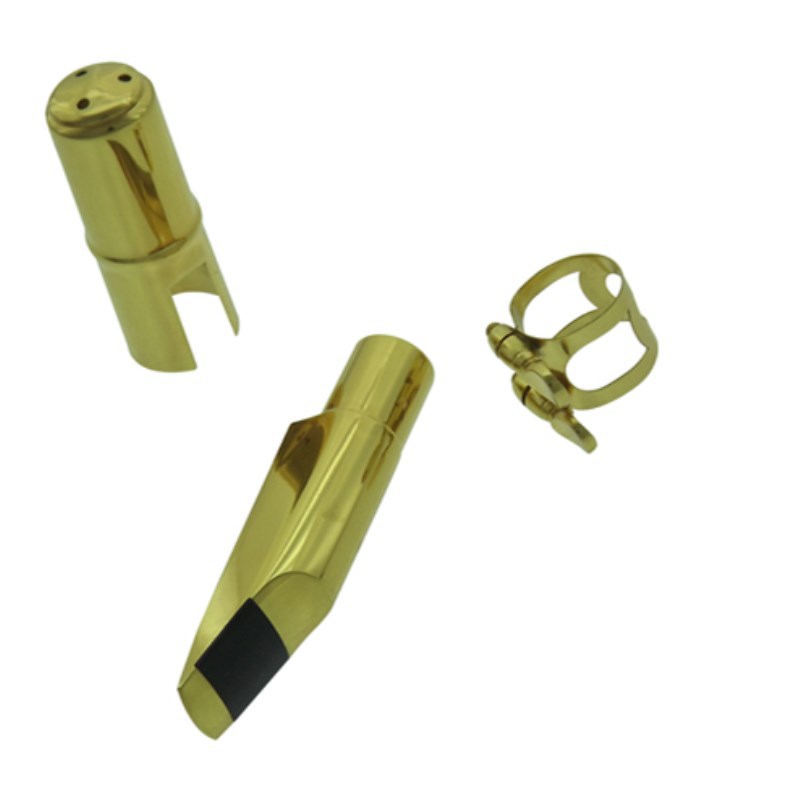
1. Tip Opening: The Mouthpiece's "Displacement"
First, let's clarify the concept: the tip opening refers to the size of the gap at the mouthpiece's tip. You can think of it as a car's engine displacement — small displacement is economical and easy to drive but can't go fast; large displacement is ferociously powerful but demands skill. The tip opening works the same way: the larger the gap, the more air flows through, the higher the ceiling on sound energy — but the demands on your breath and embouchure strength rise accordingly.
Tip openings commonly come in three tiers, each with its own temperament:
| Opening | Volume and tone | Temperament and who it suits | | --- | --- | --- | | Small | Lower volume; tone tends dark, thin, slender | Easiest to play; saves air and effort; but high notes tend to run sharp or simply won't speak, low notes lack resonance, and playing feels like "holding your breath." Sticking with a small opening long-term keeps the sound from opening up and the embouchure from developing | | Medium | Moderate volume; tone both mellow and bright | The choice of most players: lows not muddy, highs not noisy; the whole range speaks easily — good for both attack and defense | | Large | Big volume; highs turn edgy, lows carry a "whooshing" wind sound | Suits bold, sweeping repertoire, but soft playing takes real work; the upside is that long-term use "forces" your embouchure strength and air capacity to grow together |
One category deserves separate mention: metal mouthpieces. They are themselves designed with larger tip openings — loud, brittle-bright, full of metallic character, but also coarser for it. Players of rock, heavy metal, and modern music love them. Note that what they buy comes with a "brightness tax": delicacy and warmth are not their strong suits.
The advice for beginners is clear: start with a small-to-medium opening. First get the sound stable and build embouchure strength, then consider stepping up one tier.
2. Tip Opening and Reed: A Seesaw of Hard and Soft
Here is a pairing rule of great importance — one that trips up many beginners:
The core formula: large tip opening, pair with a softer reed; small tip opening, pair with a harder reed.
The logic is not complicated. A large-opening mouthpiece already takes in a lot of air with little resistance; if you also fit a hard reed, the vibration is very hard to excite and playing becomes exhausting. Conversely, a small-opening mouthpiece takes in little air; paired with a soft reed, it over-vibrates, the sound turns floaty and wild, impossible to rein in. Mouthpiece and reed are the two ends of a seesaw: add weight to one end and you must take weight off the other, until the whole vibrating system returns to its balance point.
There is also a style taboo you must remember: never pair a classical mouthpiece with jazz reeds, or a jazz mouthpiece with classical reeds. Mouthpiece and reed form a system designed around a playing style — the classical setup pursues roundness and solidity, the jazz setup pursues brightness and explosive power. Mixing them usually pleases neither side and leaves the tone twisted. Whatever style you play, use the matching kit — don't invent your own hybrids.
3. Choosing Reeds: The Old Three Rules, Advanced
Lesson 2 covered the three basic rules for choosing reeds (professional makers; medium-to-medium-soft strength; golden-red or yellowish-tan color; symmetric arch). Today we add two more dimensions:
Look at "age." Cane is an agricultural product — stock that is too old has dead, stiff fibers: lows turn stuffy, highs turn floaty or even squeal; stock that is too young is so soft it has no backbone — the sound won't stand up and it cracks easily. Choose the "middle-aged cane" whose growth cycle is just right.
Keep a rotation. The reed is the most fragile consumable on the entire instrument: every playing session dampens it, and its condition keeps changing. A pro always keeps several reeds in rotation at once — it extends the life of each reed and guarantees there's always a "voice" in good condition at hand.
For soprano players, mouthpiece selection can also reference the tip-opening size charts (measured in thousandths of an inch) published by each brand — Berg Larsen, Otto Link, Runyon, Selmer, Yamaha, and others all have clearly graded systems. Get the size matched and the soprano becomes far more manageable. We'll expand on that when you actually pick up a soprano someday.
4. Reed Sizes: How to Read the Numbers
Walk into a music store and you'll find a number printed on every reed box — 2, 2.5, 3… This is the strength number, the parameter you most need to understand when buying reeds.
What the number means: the larger the number, the harder the reed; the smaller, the softer. Strengths usually run from 1 to 5, subdivided in half steps (2, 2.5, 3, 3.5). A soft reed vibrates at the lightest breath — effortless, but the tone is thin and lacks backbone; a hard reed gives a thick, dense sound with a solid core, but needs fuller breath and stronger embouchure to drive it — you have to balance the books on both ends.
What beginners should choose: following the widely accepted principle of "medium or medium-soft strength," beginners starting on alto saxophone usually find strength 2 to 2.5 a safe starting point. This range is neither so soft that the sound collapses nor so hard that your lips are trembling after fifteen minutes. Once long tones are solid and embouchure strength has grown, consider moving up half a number.
What each style prefers: classical players go a step harder (around strength 3) for a thicker, more focused tone; jazz and pop players often use softer numbers in exchange for quicker response and a brighter attack — which echoes the earlier principle of "matching the kit to the style."
Three common traps:
First, strength numbers are not interchangeable across brands. Two boxes both labeled "2.5" can differ by half a number in feel between makers — every brand's hardness scale is its own. When switching brands, it's best to start half a number lower.
Second, don't believe in one-step-to-the-top. Strength should follow embouchure strength; jumping grades onto hard reeds only produces a strained sound and choked high notes. Move up half a number at a time and let your lips adjust gradually.
Third, same number, different fate. Reeds are made of natural cane; even within one box at the same strength, conditions differ from reed to reed — which brings us back to the "rotation system" mentioned above: picking out three to five good reeds from a box and rotating them is the economics that actually works.
Key Points of This Lesson
- Tip opening = the size of the mouthpiece's tip gap, like engine displacement: small is easy but low-ceiling, large is powerful but demanding — the medium opening is most players' choice;
- Metal mouthpieces: larger openings, bright and punchy but coarse — the domain of rock/heavy metal/modern music;
- The pairing formula: large opening with a soft reed, small opening with a hard reed — bring the vibrating system back into balance;
- Style taboo: classical and jazz mouthpieces and reeds must never be cross-matched;
- The reed's strength number is its hardness: the bigger, the harder (strengths 1–5, half steps); beginners on alto start at 2–2.5; classical leans harder, jazz softer;
- When changing strength, go up only half a number; when changing brands, try half a number lower first; reeds of the same number vary in condition — rotate them;
- Choose "middle-aged cane" (too old: stuffy lows and squeals; too young: soft, collapsing, crack-prone) and always keep several in rotation.
Questions to Check Your Reading
- Why should a large-opening mouthpiece be paired with a softer reed? Explain it yourself using the "seesaw balance" logic.
- What three problems does long-term use of only a small-opening mouthpiece bring to your learning?
- What does a metal mouthpiece sacrifice, and what does it gain in return? Which musical styles suit it?
- What does a reed's strength number mean? What number should a beginning alto player start with? What should you watch for when moving up in strength?
Next Lesson · Lesson 5, "Assembly, Disassembly, and Daily Care": The gear is complete; next we learn to "serve" it — how far onto the neck does the mouthpiece go? How do you center the reed? Why must you swab the horn within 30 minutes after playing? How often should you oil the keys? The final lesson of Unit 1 covers the entire maintenance routine in one go.
Continue Learning
Ready for the Next Step?
Follow our beginner learning path to build your saxophone fundamentals step by step.